
First-time buyers often get confused by form: some sell the raw stone, some sell powder, some put it in capsules, some in a jar with a scoop — which should you get? This is a technical walk-through of what the raw stone and powder each are, how the various dosing forms differ, and why the thing that actually decides quality was never the form.
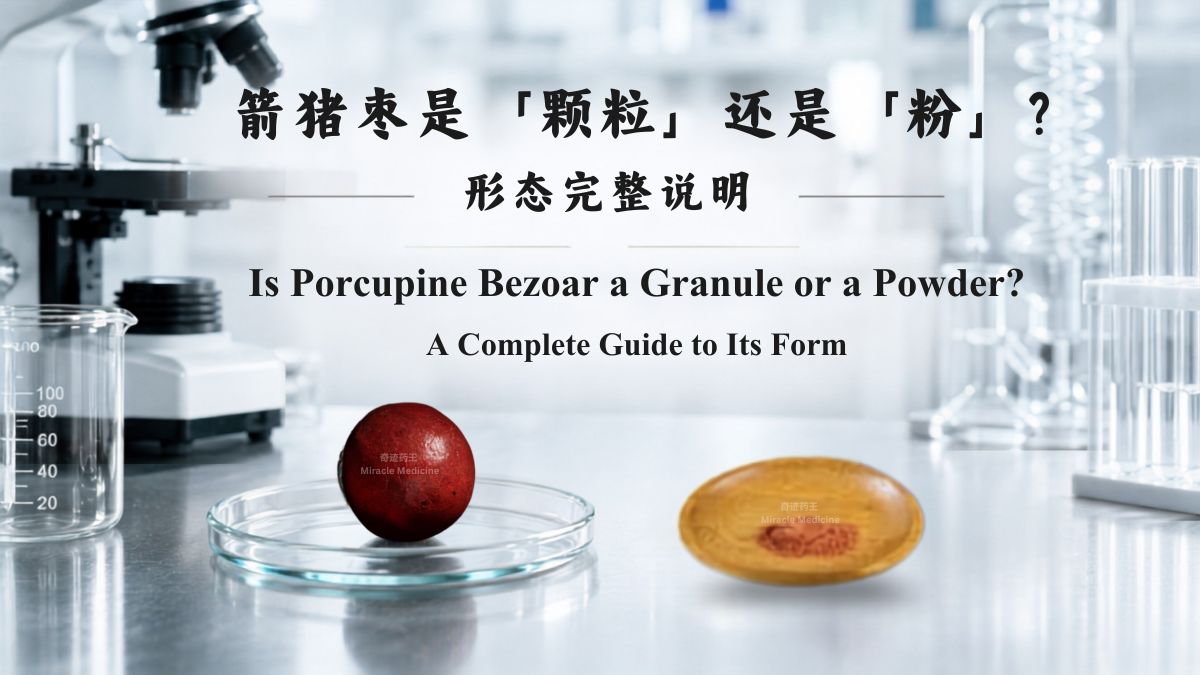
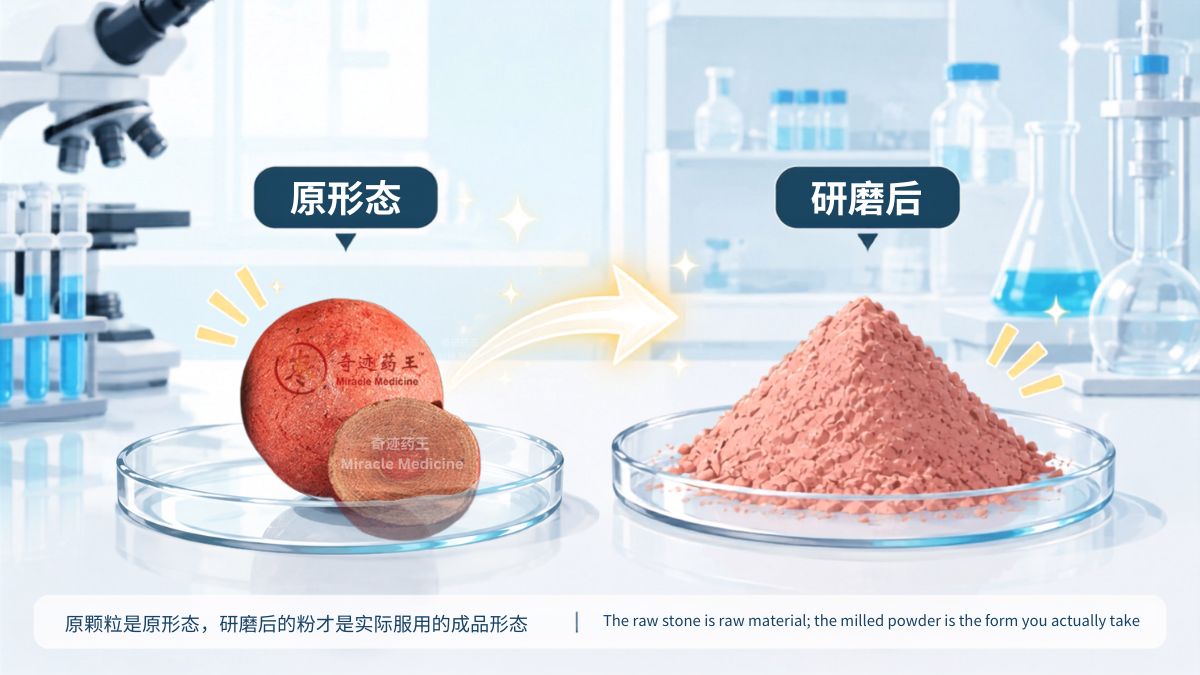
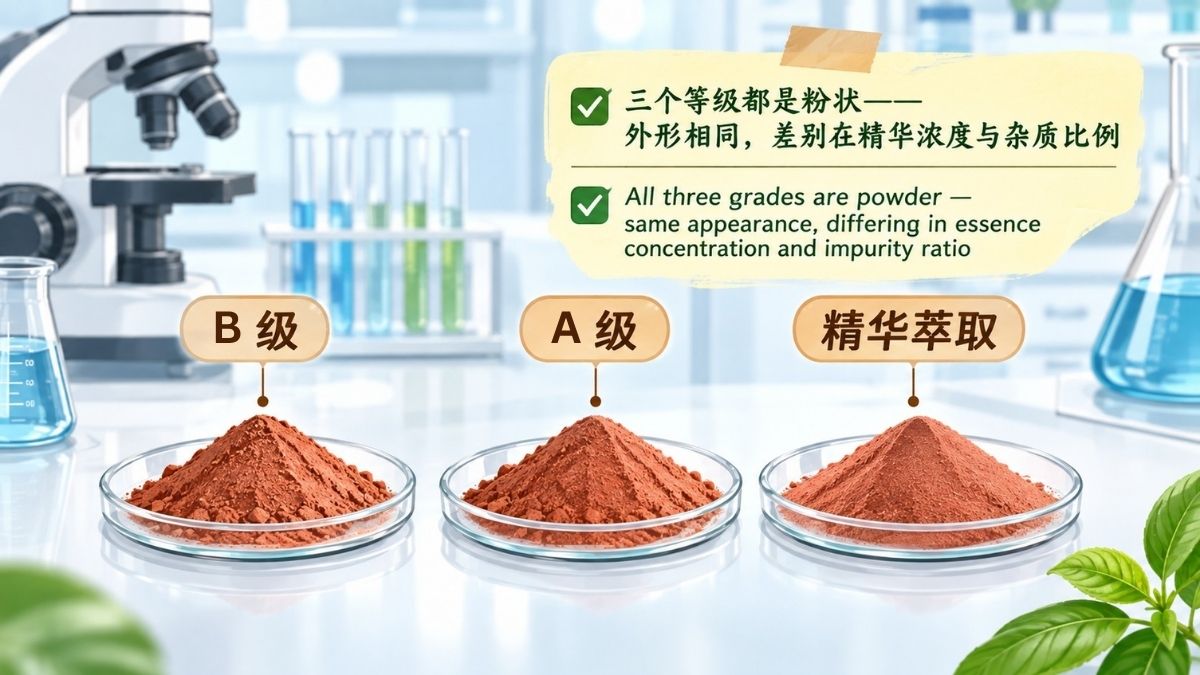
"Granule" and "powder" aren't two products — they're two stages of the same thing: the raw stone is porcupine bezoar's raw-material form, and grinding it into powder gives the form you actually take. Miracle Medicine's three grades are all powder — same form, differing in the purity inside. So choosing porcupine bezoar isn't about "granule or powder," it's about "which grade."
People searching "is porcupine bezoar a granule or a powder" usually do so because the forms on the market look different, and they're unsure: does the raw stone look more "original," so is it better? Is the powder processed, or adulterated? And what about capsules, or a jar with a scoop — which do you pick?
All fair questions. Below, in "raw material to finished product" order, is the form question taken apart clearly.
From the moment it's removed from the porcupine to the point it can be taken, porcupine bezoar passes through a couple of forms. Understand this line and the form question resolves itself:
The raw stone is porcupine bezoar unprocessed — piece by piece, red or brown on the surface, hard in texture. It's raw material, not a finished thing you eat directly. Some assume "buying it whole is more original, more authentic," but a whole stone can't be dosed precisely and isn't convenient for absorption.
Powder is the finished form after the raw stone is milled. There are two technical reasons to grind it: one, you can measure precisely by the gram; two, finer particles are absorbed more fully. It's the necessary step that turns raw material into a product you can take — not "processing" or "adulteration."
Porcupine bezoar cannot be brewed or dissolved. Unlike an instant powder it won't fully dissolve in water — mixing causes sediment and waste. The proper way is to take the powder directly, or as advised by a professional — not as a mixed drink.
Given the finished product is powder, how do different sellers have you take it? Two approaches are common on the market, each with one problem.
Taken directly, the powder is somewhat bitter, which many younger people can't accept, so some sellers put it in capsules. The taste is solved — but the capsule comes at a cost: it delays the powder's contact and release in the mouth and digestive tract, impairing absorption. Miracle Medicine therefore does not recommend taking porcupine bezoar in capsules.
Others make one large jar of powder with a small scoop, taking it by the scoopful. Convenient, yes — but scooping has a real problem: the amount differs every time, a little more or less, hard to keep precise. And porcupine bezoar is priced by the gram and dose-sensitive, so an unstable amount isn't ideal.
To address both problems, Miracle Medicine's method is: each portion is 0.4 grams of powder wrapped in oil paper, then individually sealed. Every portion is a fixed amount — never varying the way a scoop does.
For dosing, it's suggested to hold the powder under the tongue and let it slowly dissolve, rather than swallow it in a capsule. Sublingual dosing lets the powder make direct contact and release gradually — which is also why capsules aren't recommended: a capsule keeps that process apart.
Which brings the key idea to establish: neither form nor dosing method decides quality — grade does.
Miracle Medicine's Porcupine Bezoar products come in three grades, all powder, differing in composition:
| Spec | Traditional Grade B | Traditional Grade A | Essence Extracted Version |
|---|---|---|---|
| Form | Powder | Powder | Powder |
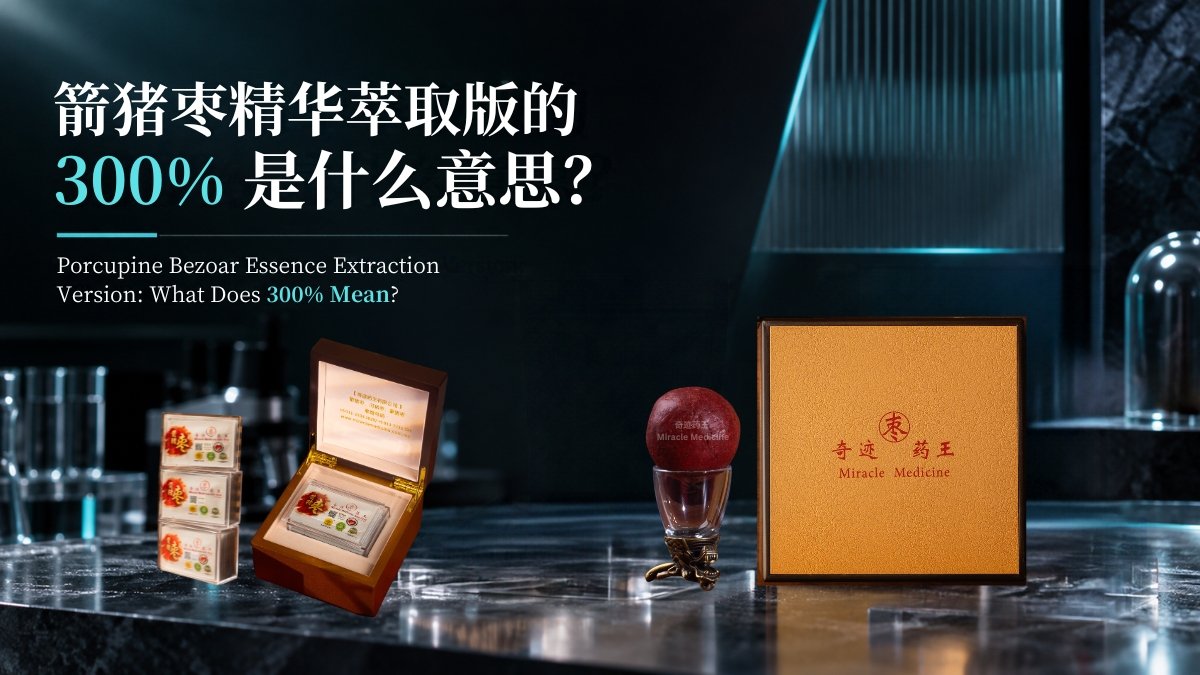
| Essence conc. | 60%(Baseline) | 90% | 300% |
| Impurity Ratio | 40% | 10% | 0% |
| Processing | Whole milled | Sorted & milled | Essence Extraction |
The "300%" figure for the Essence Extracted Version is measured against the Traditional Grade B baseline. At the same weight, the Essence Extracted Version's absorption is approximately 3 to 4 times that of the traditional versions, with 0% impurities. These figures come from third-party testing and can be verified.
So next time you face a "granule vs powder" choice, reframe the question: not which form is better, but which grade this powder is — its essence concentration and impurity ratio. That's where quality is actually distinguished.
On the essence-extracted version's composition and mechanism, Miracle Medicine has a collaborative animal-model study with Guangdong Pharmaceutical University (published in MDPI Pharmaceuticals, DOI: 10.3390/ph19040563); the full data and mechanism are on the research page. It is an animal-model study, providing a basis for further research and not directly extrapolable to humans.
Tell Miracle Medicine your situation and we'll explain it at a technical level — from composition and dosing needs. Products hold five certifications: KKM-registered TCM practitioner consultation, Tested by Halvec Laboratories, GMP, ISO 9001:2015, ISO 22000:2018; compound products additionally hold MeSTI and HACCP.